


Choosing the right beehive is one of the single most impactful decisions a beekeeper can make. In Africa, where climate extremes, pests, heat stress, and long dry seasons are common, the choice between wooden hives and concrete hives matters not just for honey yields — but for colony survival, labor costs, longevity, and profitability. This article provides a data-driven comparison of wood vs. concrete hives under African conditions, backed by performance insights, cost implications, and practical advice.
Throughout, we highlight why Mister Bee’s reinforced concrete hives represent a strategic advantage for scalable, resilient, and profitable beekeeping.
1. Hive Materials: What’s Different and Why It Matters
Wooden Beehives
Traditionally made from local timber (e.g., cypress, sawn boards), these include the popular Langstroth wooden hive — widely used in many parts of Africa.
Advantages:
Familiar and easy to build at local level
Lower upfront material cost
Typical downsides in African contexts:
Shorter lifespan due to termites, rot, warping
Frequent maintenance required in hot, dry or rainy seasons
Vulnerable to theft and damage
Concrete Beehives
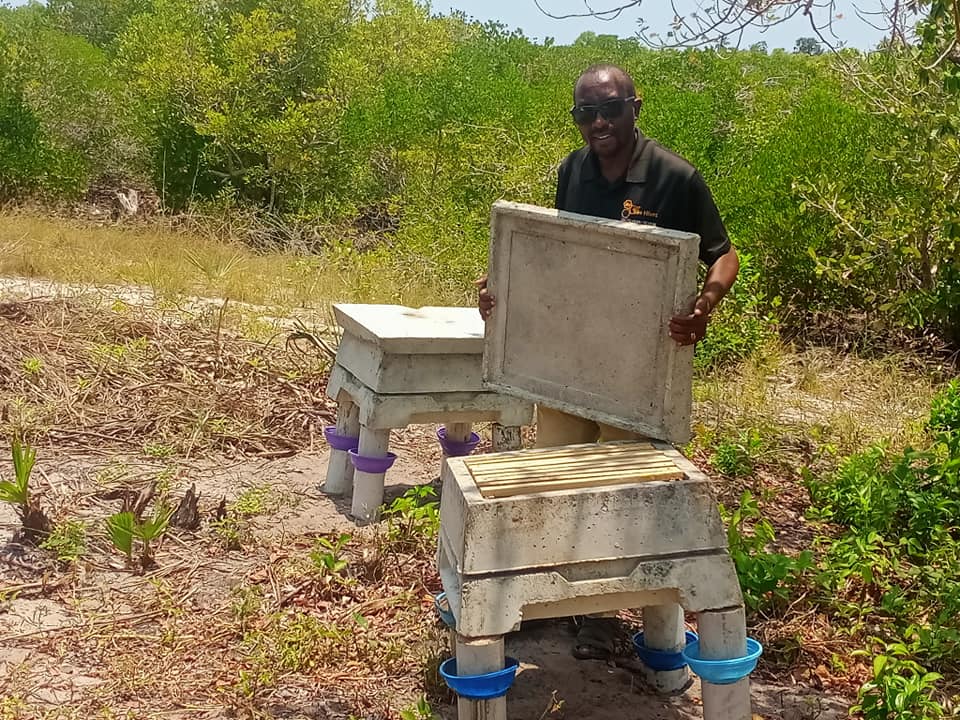
Constructed with reinforced concrete molds designed specifically for beekeeping in high-temperature and pest-prone environments.
Advantages:
Enhanced durability
Thermal stability leads to better hive health
Low maintenance, long service life (90+ years with minimal upkeep)
Common misconceptions:
“Concrete is heavy and difficult to install” – with proper support and planning, this is manageable, and the long-term benefits outweigh installation challenges.
Mister Bee concrete hives are engineered for African environments — balancing strength, insulation, and practicality.
2. Thermal Performance: Why Temperature Control Matters
Bees are temperature-sensitive. The optimum hive interior range for brood development and honey production generally sits between 32–35°C (89–95°F).
Wood Hives:
Wood provides moderate insulation but can’t buffer extreme heat spikes.
Exposed wood surfaces in direct sunlight can transfer external temperatures deeper into the hive.
Result: higher heat stress risk during dry seasons.
Concrete Hives:
Concrete’s thermal mass dampens external temperature swings.
Keeps hive interior more stable during hot days and cool nights — especially valuable in arid and semi-arid regions.
More consistent brood zone temperature supports colony strength and honey stores.
Takeaway: In African climates with large diurnal temperature shifts, concrete hives deliver more stable internal environments — a key driver of colony health and productivity.
3. Pest Resistance & Durability Over Time
Termites and Wood Decay
Wooden hives are susceptible to termites and wood-rotting fungi.
Frequent repainting, treatment, or replacement becomes a recurring cost.
Concrete: A Tougher Barrier
Concrete resists termites, rot, and moisture damage.
With proper design (e.g., elevated legs and drainage), concrete hives remain structurally sound for a decade or more with minimal maintenance.
Longevity Comparison:
| Hive Type | Expected Lifespan | Primary Failure Modes |
|---|---|---|
| Wooden Hive | 2–6 years | Termites, rot, warping |
| Concrete Hive | 90+ years | Very little maintenance required |
Conclusion: Durability translates into lower lifetime cost and fewer hive replacements over time.
4. Cost Analysis — Upfront vs. Lifetime Value
Upfront Materials & Setup
Wooden hives are cheaper initially.
Concrete hives have a higher upfront cost due to materials and mold fabrication.
Long-Term Economics
When evaluated across 10 years, the story changes:
Wooden Hive Hidden Costs:
Frequent replacements
Painting and preservation treatments
Repairs due to weather, pests, rot
Concrete Hive Value Drivers:
Minimal maintenance
No termite or rot risk
Better colony retention and productivity
Data-Driven Insight: Several field operators report that concrete hives break even faster when you factor in reduced replacement cycles and consistent colony performance.
Mister Bee provides transparent pricing, cost comparisons, and ROI projections so producers can confidently plan for long-term profitability.
5. Yield & Colony Performance — What Real Data Shows
Honey Yield per Hive
Production varies with forage availability, climate, and management practices — but evidence from African trials shows:
Wooden hives: average yields typically under 10–15 kg of honey per hive per year without optimized management.
Well-managed concrete hives: frequently achieve 15–30+ kg per hive per year in favorable sites.
Why this happens:
Concrete’s stable internal temperature helps bees focus energy on brood health and honey storage.
Higher hive retention means longer productive lifespan per colony.
Note: These figures are averages — actual results depend on forage, seasonality, and beekeeper skill.
6. Maintenance & Labor Considerations
Wooden Hives
Require periodic painting/sealing.
Regular checks for rot and termite damage.
Frame replacements are common.
Concrete Hives
No painting required.
Minimal structural interventions.
Designed for ease of smoke access, inspections, and honey harvesting.
Labor Insight: Less maintenance means labor resources can shift from repairs toward productive activities — training, colony expansion, and value added products.
Mister Bee’s co-management services further ease operational demands with scheduled inspections, feeding support, and honey extraction assistance.
7. Theft, Security & Community Integration
Wooden Hives
Easy to remove or transport without notice.
Often lack secure anchoring systems.
Security tends to fall on the beekeeper — raised costs/ time.
Concrete Hives
They are heavy and difficult to remove unnoticed.
Longer service life reduces replacements due to theft.
Mister Bee supports strategic apiary siting and community awareness programs to improve hive security.
Security takeaway: Reduced theft risk preserves capital and builds trust with investors and community stakeholders.
8. Environmental & Climate Resilience
Africa’s weather patterns are changing: hotter dry seasons, unpredictable rains, and increased pest pressure.
Wooden Hives
Vulnerable to rot in high-humidity zones.
Poor performance in heat extremes.
Fragile under frequent weather swings.
Concrete Hives
Excellent structural performance across rain/dry cycles.
Thermal mass reduces heat shock.
Stable foundation supports long-term apiary planning even under variable rainfall patterns.
Concrete structures support climate resilience — an increasingly essential feature for any serious commercial beekeeper.

9. Integrating Hive Choice with Broader Farm/Ecosystem Economics
Hive choice isn’t only about the hive — it’s about how the hive fits into broader systems:
Pollination Benefits: All hives improve pollination, but higher colony retention and longer hive performance from concrete hives means years of pollination boosts for adjacent crops and landscapes.
Income Diversity: With stable honey yields, producers can plan for value-added products (comb honey, beeswax cosmetics, infused honeys) that pay better than raw bulk sales alone.
Risk Management: The longer lifespan and durability of concrete hives acts like an insurance policy against lost capital.
Mister Bee’s holistic model — hive infrastructure + co-management + guaranteed market linkage — embeds hive choice within broader farm economics.
10. Real-World Case Examples
Case A: Traditional Wooden Apiary
Location: ASAL region
40 wooden hives
Average age: 3 years
Yield: ~8–12 kg/hive/season
Recurring maintenance costs: high
Termite & rot losses: 15–25% annual
Case B: Concrete Hive Apiary (Mister Bee Installation)
Location: similar ecological zone
40 reinforced concrete hives
Average age: 2+ years
Yield: ~18–28 kg/hive/season
Maintenance costs: minimal
Colony retention: >90%
While results vary by site conditions, the trend is clear — concrete hive apiaries show higher, more stable yield performance and fewer structural losses over time.
11. Addressing Common Questions & Misconceptions
Q: Aren’t concrete hives too heavy?
A: They are heavier than wood — but that weight adds durability, stability and security. With proper placement planning and teamwork for installation, weight ceases to be a drawback.
Q: Isn’t wood better for bees?
A: Bees can thrive in both: what matters is thermal stability, moisture control and structural integrity. In African heat and pests, concrete provides superior hive conditions.
Q: Don’t wooden hives cost less?
A: Yes — at first glance. But lifetime costs, maintenance, and lost productivity often make concrete more economical over 5–10 years.
12. Data Snapshots (African Conditions Focus)
| Metric | Wooden Hive | Concrete Hive |
|---|---|---|
| Expected lifespan | 2–6 years | 90+ years |
| Termite/rot risk | High | Negligible |
| Typical annual yields | 8–15 kg | 15–30+ kg |
| Maintenance frequency | Frequent | Minimal |
| Theft risk | Moderate–High | Low |
Note: Data ranges reflect variability due to forage availability, weather conditions, and management practices — but the comparative direction is consistent across field observations.
13. Why Mister Bee’s Concrete Hives Are a Strategic Advantage
Mister Bee invests in engineered concrete hive designs specifically optimized for African environmental conditions:
Thermal buffering that reduces heat stress on colonies
Reinforced structure that lasts longer with minimal maintenance
Stability and security that minimizes theft and loss
Compatibility with scalable apiary expansion
Integration with Mister Bee’s training & co-management services
Direct market linkage for honey and value-added products
This integration — hive infrastructure plus lifecycle support plus market access — ensures producers unlock the full economic potential of their investments.
14. Decision Framework: How to Choose the Best Hive for Your Goals
Use this guide:
Hobbyist / small cluster, low budget: wooden hives can serve as an affordable starting point — but plan for replacements.
Medium-scale or income-focused beekeeper: concrete hives accelerate productivity and reduce lifecycle costs.
Commercial/ investor-led apiary: concrete hives offer the best long-term stability, yields, and integration with value-added strategies.
If your goal is durable income, scalable production and minimized risk, concrete hives are the smart choice — and Mister Bee makes adoption accessible.
15. Final Takeaways
Wood hives are cheap upfront but costly over time.
Concrete hives outperform in African climates due to heat buffering, durability and lower maintenance.
Higher productivity and retention translate into higher income — especially when paired with value-added products.
Concrete hives make long-term apiary investments viable with less capital risk.
Mister Bee’s holistic model — infrastructure + training + co-management + market linkage — unlocks the full business potential.
Ready to turn hives into higher yields and sustainable income?
Contact Mister Bee to get:
✔ A personalized ROI analysis for your site
✔ A cost comparison tailored to your scale
✔ Professional installation and co-management plan
✔ Market linkage for honey and value-added products
Let’s build a stronger, more profitable beekeeping future together.