

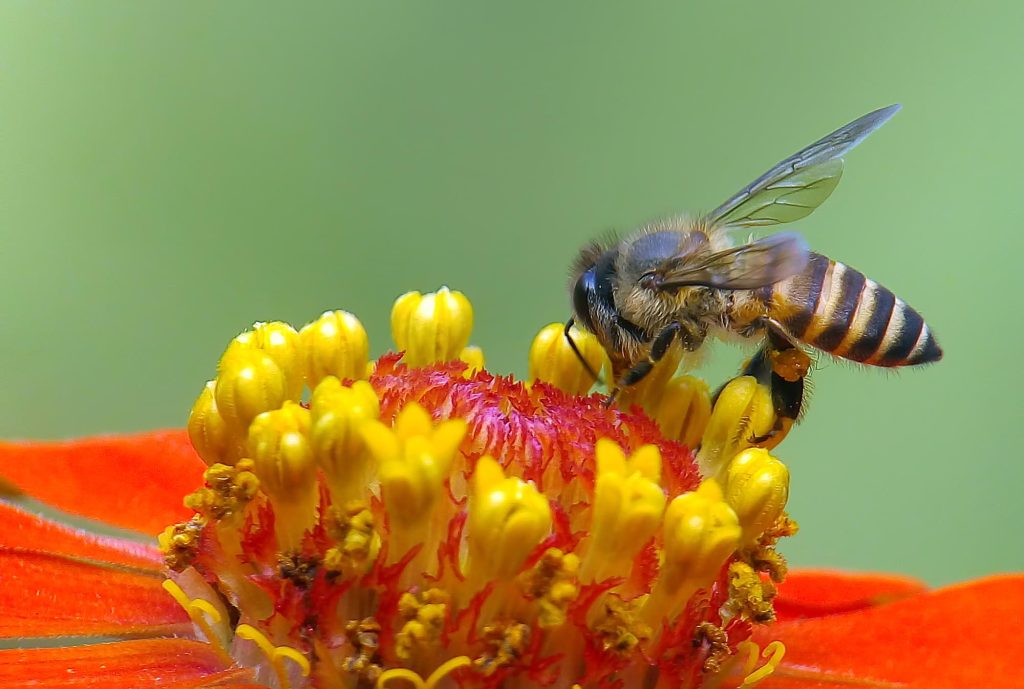
Somewhere on a hillside in rural Kenya, a woman named Wanjiru rises before dawn. She tends a row of hives nestled under the shade of indigenous trees she planted herself. Within those hives, tens of thousands of bees are already at work — mapping flowers, transferring pollen, orchestrating a dance of pollination that will eventually fill her family’s harvest baskets, feed her community, and send ripples of ecological health across the landscape. Wanjiru may not know it yet, but she is part of one of the most important movements shaping Africa’s future.
Bees are the quiet architects of our food systems. They ask for nothing — no wages, no subsidies, no Wi-Fi — and they give everything. Yet today, across Africa, bee populations face mounting threats: habitat loss, pesticide overuse, climate disruption, and a growing disconnect between modern land-use practices and the ancient rhythms of the natural world. At Mister Bee, we believe that reversing this trend is not just an environmental cause — it is an economic imperative, a cultural calling, and a collective responsibility.
This article is an invitation. An invitation to farmers and entrepreneurs, to educators and policymakers, to city-dwellers and conservationists: come build something extraordinary with us. Africa’s future is being pollinated right now. The question is whether we will tend that process with intention.
Why Bees Are Africa’s Most Undervalued Asset
Africa is home to over 3,000 species of wild bees — more biodiversity than any other continent on Earth. The native African honeybee, Apis mellifera, is famously resilient: adapted over millennia to our soils, our seasons, and our flora. And yet, despite this extraordinary natural inheritance, Africa captures only a fraction of the global honey market, and bee-dependent agriculture continues to underperform relative to its true potential.
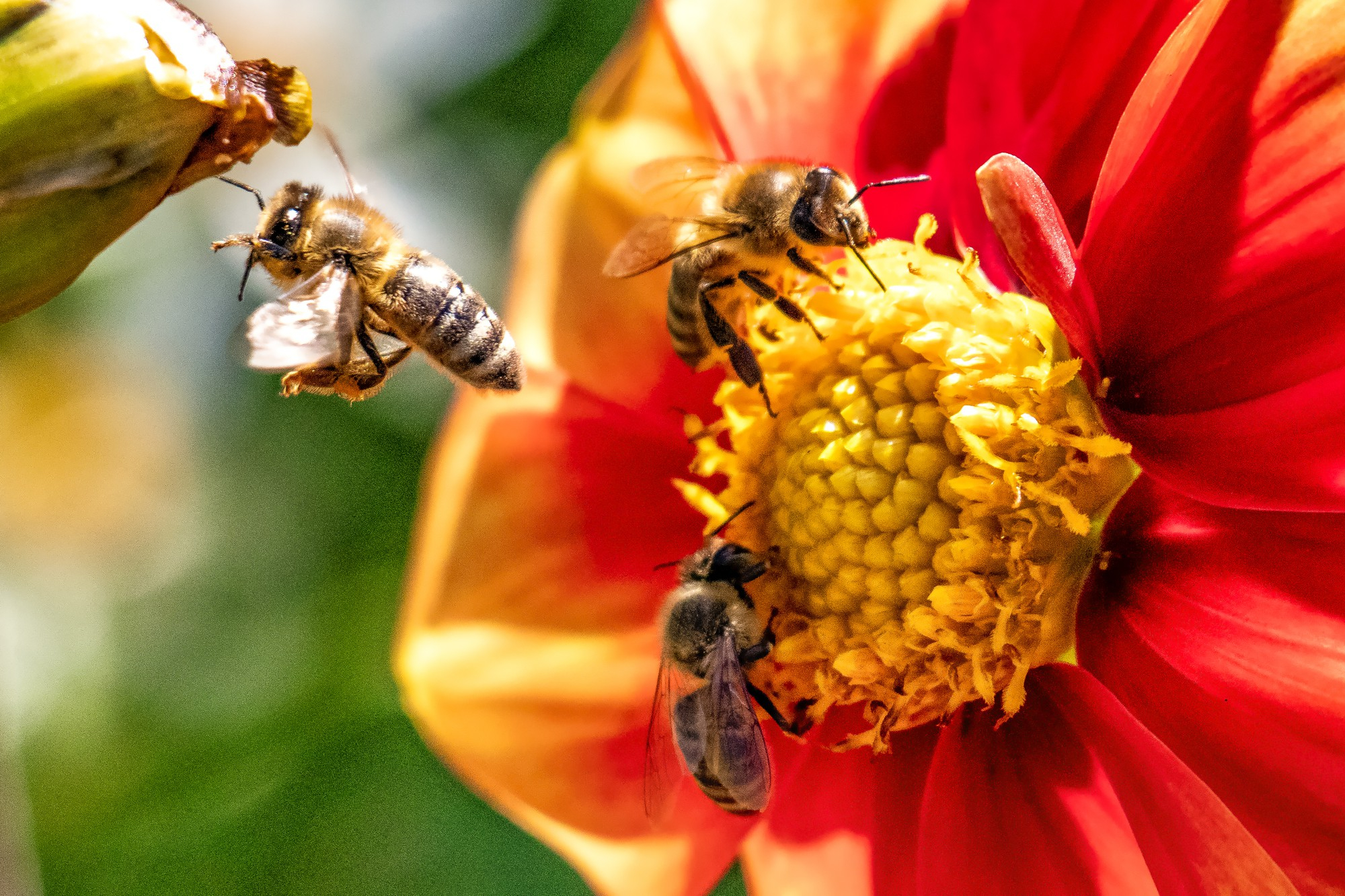
Consider what bees actually do. Approximately 75% of the world’s flowering crops depend on animal pollinators — and bees are by far the most effective. In Africa, crops ranging from sunflowers, macadamia, and avocado to sorghum, cowpea, and wild fruits rely on bee activity for yield quality and quantity. Studies across East Africa consistently show that farms with healthy bee populations produce significantly higher yields per hectare than those without.
Beyond pollination, honey and bee products represent a rapidly growing premium market. Organic, raw, single-origin African honey is increasingly sought after by health-conscious consumers in Europe, the Middle East, and Asia. Beeswax, propolis, and royal jelly command high prices in cosmetic and pharmaceutical markets. Yet most African beekeepers operate at subsistence scale, disconnected from value chains that could transform their hives into genuine businesses.
When you protect a bee, you protect a harvest. When you protect a harvest, you protect a family. When you protect a family, you begin to rebuild a continent. — Mister Bee
The Threats We Cannot Afford to Ignore
Understanding the opportunity requires first acknowledging the crisis. Bee populations worldwide are under pressure, and Africa is not immune. While our native bees are hardier than their European counterparts, they face a converging set of threats that demand urgent, coordinated action.
Habitat Loss and Deforestation
As agricultural land expands and urban centres sprawl, the indigenous forests and wildflower meadows that bees depend on are disappearing. Without diverse forage, colonies weaken. Without nesting sites, queens cannot lay. The destruction of habitat is, at its core, the destruction of the bee’s home — and by extension, ours.
Pesticide Overuse
Many smallholder farmers across Africa apply pesticides without knowledge of timing, dosage, or ecological impact. Bees forage during daylight hours — the same hours when most spraying occurs. Neonicotinoids and organophosphates, even at sub-lethal doses, impair bee navigation, reduce colony reproduction, and compromise immune response. Education and safer alternatives are urgently needed.
Climate Disruption
Shifting rainfall patterns, erratic flowering seasons, and extreme heat events all disrupt the finely tuned synchrony between bees and their forage plants. A bee that emerges to find no flowers — because drought has delayed blooming — is a bee that cannot feed its colony. Climate adaptation is, therefore, also bee conservation.
Knowledge Gaps and Outdated Practices
Traditional beekeeping practices in many African communities are deeply valuable — but they need to be paired with modern hive management knowledge. Without understanding of colony health, swarm prevention, honey harvesting best practices, and disease recognition, even the most dedicated beekeeper may inadvertently weaken their colonies or limit their yields.
What the Movement Looks Like on the Ground
At Mister Bee, we are not interested in abstract conservation theory. We are interested in what happens when a rural farmer receives training, quality equipment, and market access. We are interested in what happens when a school introduces beekeeping into its curriculum. We are interested in what happens when a corporate partner decides to invest in the apiaries of women-led cooperatives rather than purchasing imported honey.
These are the real stories of the movement — and they are being written every day across Kenya and beyond.
Farmers Becoming Entrepreneurs
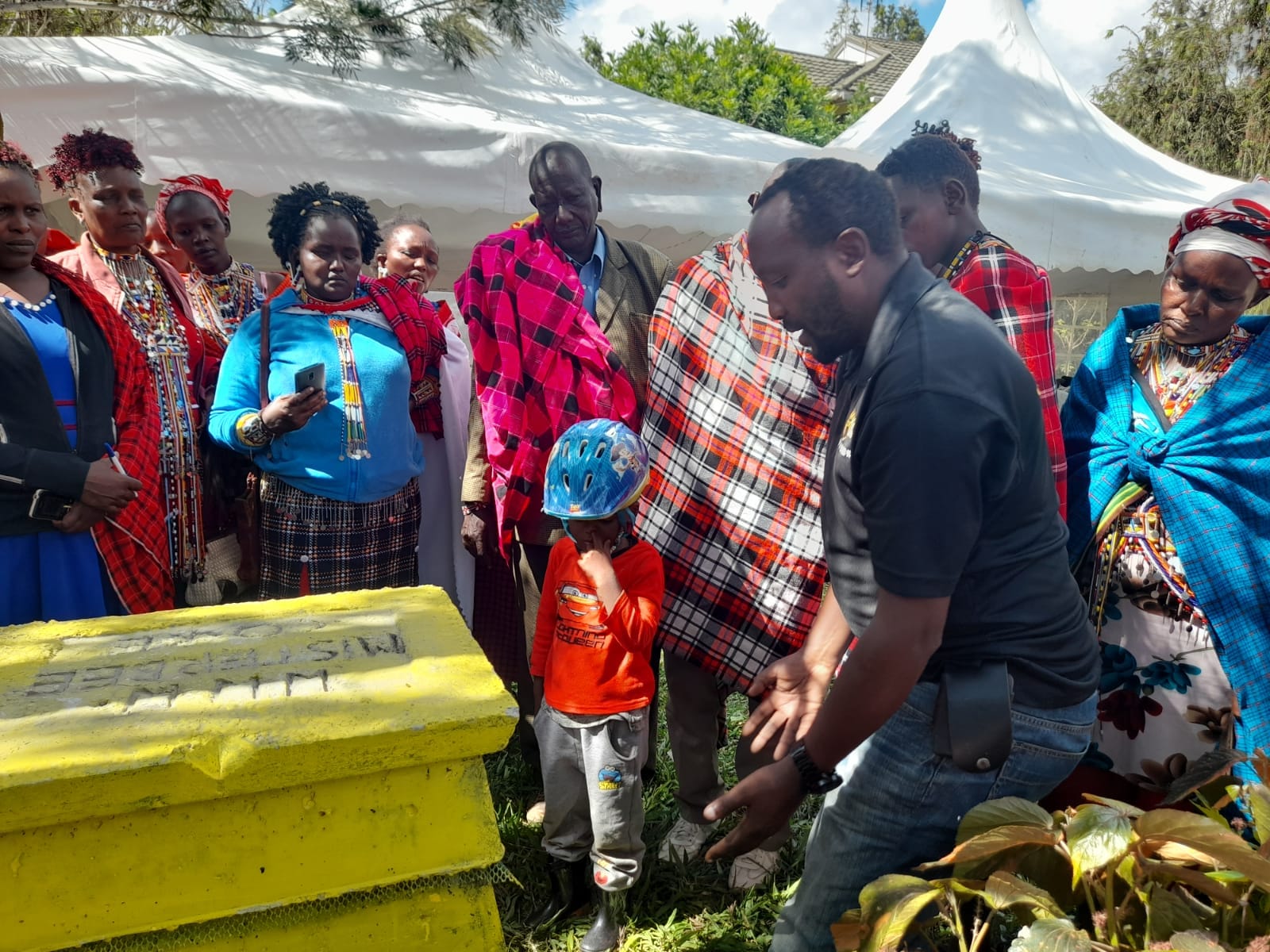
When smallholder farmers are equipped with Langstroth hives, protective gear, and access to mentorship, a remarkable transformation takes place. What begins as a subsistence activity becomes a side business, and then a primary livelihood. Farmers who once depended on a single cash crop now diversify their income through honey sales, wax products, and — perhaps most importantly — dramatically improved crop yields from on-farm pollination.
Women Leading the Way
Beekeeping has proven to be a particularly powerful entry point for women’s economic empowerment. Hives can be managed close to home, the startup costs are relatively low, and the cooperative model encourages knowledge-sharing and collective marketing. Women-led beekeeping groups across Kenya are pooling their honey, negotiating better prices, and reinvesting profits into their children’s education and household infrastructure. This is not charity — it is entrepreneurship.
Youth Reconnecting with the Land
One of the most hopeful dimensions of the movement is the growing interest among young Africans in agri-preneurship. Beekeeping, when presented not as farming but as a tech-enabled, market-linked business opportunity, resonates deeply with a generation that wants to build futures on African soil rather than seek them abroad. Youth who engage with bees develop patience, systems thinking, ecological literacy, and entrepreneurial confidence — skills that serve them far beyond the hive.
Five Ways to Join the Movement
The beauty of this movement is its breadth. Whether you are an individual, a community organisation, a school, a business, or a government body, there is a meaningful and practical role for you. Here is where to begin.
Plant for Pollinators
Transform your farm, garden, schoolyard, or compound into a bee habitat. Plant indigenous flowering species — sunflowers, African basil, Tithonia, Leucaena — to create a living forage corridor that sustains colonies throughout the year.
Start or Support a Hive
Whether you want to become a beekeeper yourself or sponsor a hive for a rural community, starting with a single colony is the most direct investment you can make in the ecosystem and in someone’s economic future.
Partner with Purpose
Businesses, NGOs, and government agencies can partner with Mister Bee to integrate beekeeping into CSR programmes, conservation initiatives, agricultural extension services, and community development projects.
Advocate and Educate
Speak up for pesticide regulation, land conservation, and agricultural training programmes in your community. Bring a beekeeper into your school. Share the science and the stories. Advocacy is action.
Buy Local Honey
Every jar of Kenyan honey you purchase is a vote for a sustainable food system. Choosing local, traceable honey supports farmers, reduces food miles, and keeps value within African communities where it belongs.
Learn and Share Knowledge
Attend training sessions, workshops, and field days. Share what you learn with neighbours, family, and colleagues. Knowledge is the most scalable resource we have — and in beekeeping, it can literally save colonies.
A Call to Partners: The Partnerships Africa Needs
No movement of this scale succeeds without collaboration. At Mister Bee, we are actively building an ecosystem of partners who share our conviction that bees are central to Africa’s agricultural and environmental future. We are looking for partners who are willing to think long-term, invest in communities, and measure success not just in quarterly returns but in lasting ecological and social change.
Partnership Opportunities with Mister Bee
We invite organisations of all kinds to explore how a partnership with Mister Bee can create shared value across economic, environmental, and social dimensions.
- Agricultural Enterprises & Cooperatives — Integrate pollination services and honey production into existing farming operations for measurable yield improvements and diversified income streams.
- Corporate CSR Programmes — Fund hive installations, beekeeper training, and conservation planting in communities near your operations. We provide full programme design, implementation, and impact reporting.
- Educational Institutions — Introduce practical beekeeping curricula, establish school apiaries, and link students to careers in sustainable agriculture and environmental science.
- Government & Development Agencies — Co-design county-level pollinator conservation strategies, agrochemical awareness campaigns, and rural livelihoods programmes grounded in evidence.
- Research & Academic Bodies — Partner on studies tracking colony health, pollination economics, climate adaptation strategies, and the social impact of beekeeping enterprises.
- Export & Retail Partners — Help us connect Kenyan honey producers to premium domestic and international markets with fair trade principles and transparent supply chains.
To explore a partnership, reach out to us at misterbeehives@gmail.com. We respond to every enquiry, because every partnership matters.
The Policy Case: What Governments Must Do
Individual action and private partnerships are necessary but not sufficient. Lasting change in Africa’s beekeeping landscape requires policy leadership — and this is where advocacy becomes indispensable.
We call on governments across the continent to:
Regulate harmful agrochemicals more effectively. Restricting the most bee-toxic pesticides, mandating warning labels, and establishing pesticide-free buffer zones around known pollinator habitats are achievable, evidence-based interventions that could dramatically reduce colony losses.
Invest in agricultural extension for beekeeping. Too few counties and districts have trained beekeeping extension officers. Closing this gap means more farmers receive accurate, up-to-date guidance on hive management, disease control, and market access — directly translating into improved rural incomes.
Protect and restore indigenous vegetation. Land-use planning that incorporates pollinator corridors, protects riparian vegetation, and incentivises agroforestry is not just environmentally sound — it is economically rational. Healthy ecosystems underpin productive agriculture.
Create fiscal incentives for beekeeping enterprises. Tax relief, subsidised equipment programmes, and preferential credit terms for registered beekeeping cooperatives can catalyse rapid sector growth with relatively modest public investment.
Support research and data collection. Decision-making about pollinator conservation must be grounded in African data, not extrapolated from European or North American studies. Funding locally led research into bee population dynamics, colony health, and pollination economics is a foundational investment.
Policy without community is powerless. Community without policy is unsupported. The movement we need is the one where both move together — and move fast. — Mister Bee
Africa’s Honey Flows Toward a Different Future
It is easy to feel overwhelmed when confronting environmental challenges at scale. The deforestation figures, the colony collapse stories, the climate projections — they can produce paralysis rather than action. But when we look at what is actually happening in apiaries and communities across Kenya, we see something different from despair. We see momentum.
We see a woman in Embu County who started with two log hives and now manages a cooperative of forty members. We see a secondary school in Nakuru where students maintain six Langstroth hives, sell honey at the school gate, and fund their own science lab equipment. We see a young man in Kisumu who left a city job to return to his family’s farm, where he is now earning more — and living better — as a beekeeper and honey entrepreneur than he ever did in a cubicle.
These are not isolated anecdotes. They are evidence of a system that works — when given the tools, the knowledge, the markets, and the policy support to thrive.
Africa has always known how to work with the land. Our ancestors observed bees, followed honey guides, tended hives in logs and clay pots long before modern apiculture was formalised. What we are doing now is not starting from zero. We are remembering something essential, equipping it with contemporary tools, and scaling it to meet the challenges of our time.
The continent that feeds the world can also be the continent that pollinates it — sustainably, profitably, and on its own terms.
The Hive Needs You
Every colony strengthened, every farmer trained, every policy improved, and every jar of honey purchased is a contribution to a living, buzzing movement. Find your place in it — today.