


Kenya stands at a crossroads. As climate pressures intensify, soil degradation spreads, and youth unemployment climbs, the country needs agribusinesses that give back more than they take. Beekeeping does exactly that — and then some.
Walk through the forests of Mt. Kenya, the acacia savannahs of Kajiado, or the smallholder farms of Kakamega, and you’ll find something remarkable: an ancient relationship between humans, bees, and landscape that still holds the key to a more prosperous, more sustainable future. Beekeeping is not merely a rural tradition. Today, it is one of the most compelling green enterprise models available to Kenyan farmers, entrepreneurs, and communities.
At Mister Bee, we have spent years helping Kenyans build beekeeping businesses that are ecologically sound, economically rewarding, and built to last. In this article, we want to make the case — thoroughly and honestly — for why beekeeping deserves a central seat at Kenya’s agribusiness table.
The Scale of Kenya’s Honey Opportunity
Kenya is home to an extraordinarily rich bee biodiversity. The African honey bee (Apis mellifera) thrives across the country’s varied ecosystems, from coastal mangrove forests to highland moorlands. Yet despite this natural endowment, Kenya imports a significant share of its commercial honey needs. The gap between what is produced and what is consumed represents one of the most accessible market opportunities in East African agriculture.
100K+Metric tonnes annual honey demand in East Africa
3M+Kenyan households engaged in or adjacent to apiculture
80%Of crops depend on pollinators like bees for yield
Beyond honey, the global market for bee products — beeswax, propolis, royal jelly, and bee pollen — is expanding rapidly. Kenyan producers who invest in quality infrastructure and good apiary management are well-positioned to capture premium domestic and export markets.
Low Carbon Footprint, High Environmental Return
One of the defining attributes of a truly sustainable business is its ecological balance sheet. How much does it take from nature, and how much does it give back? Very few enterprises score as well as beekeeping on this measure.
Bees require no cleared land, no irrigation infrastructure, no synthetic fertilisers, and no chemical inputs to function. A well-managed apiary integrates seamlessly into its surrounding ecosystem. In fact, the presence of healthy bee colonies actively restores ecological health through pollination — improving yields of wild plants, regenerating forest understories, and sustaining biodiversity corridors that benefit every other form of agriculture nearby.
For Kenya, where deforestation, land degradation, and declining biodiversity are pressing concerns, bees are not just passive participants in the landscape — they are active restorers of it. Beekeepers, by extension, become stewards of the environment simply by doing their work well.
“When you place a hive in a landscape, you are not just starting a business. You are commissioning a small, tireless army to repair what ails the ecosystem around you.”
— Mister Bee, Philosophy of Sustainable Apiculture

Why Concrete Beehives Are the Future-Proof Choice
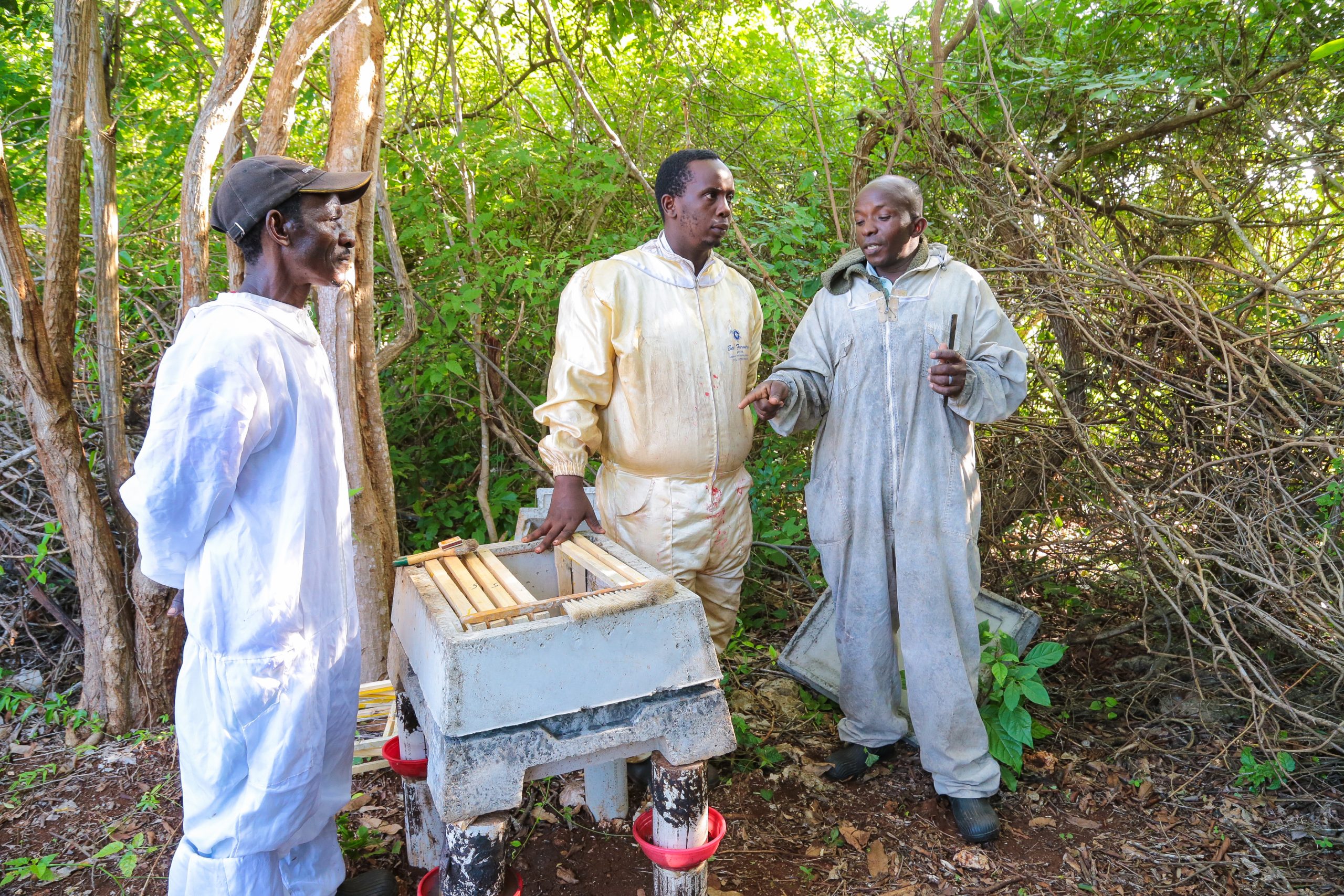
The infrastructure you invest in shapes the sustainability of your enterprise for decades. At Mister Bee, we advocate unequivocally for concrete beehives — and the reasons go far beyond preference.
The Concrete Advantage: Built for Kenya’s Climate and Ambitions
- Exceptional longevity: Concrete beehives can last 20 to 30 years with minimal maintenance, far outlasting alternatives that warp, rot, or succumb to termite damage in Kenya’s humid and tropical environments. This dramatically lowers the long-term cost per hive.
- Superior thermal regulation: Concrete’s thermal mass moderates internal hive temperatures naturally, keeping colonies cooler during the intense dry-season heat and insulated during cooler highland nights. Stable temperatures produce calmer, more productive bee colonies.
- Termite and pest resistance: In many Kenyan farming zones, termite pressure destroys wooden infrastructure in as little as two to three years. Concrete is completely impervious, protecting both the hive structure and the colony inside.
- Weatherproof durability: Heavy rains, direct sun exposure, and humidity cycles cause no structural degradation to concrete hives. They remain structurally sound across decades of outdoor use without repainting, retreating, or replacement.
- Forest conservation benefit: Every concrete hive placed is a tree not felled. At scale, communities adopting concrete hives contribute meaningfully to Kenya’s forest conservation goals — a direct sustainability dividend.
- Reduced lifecycle costs: While the initial investment is comparable, the total cost of ownership over a 10-year period for concrete hives is substantially lower when maintenance, replacement cycles, and colony losses from structural failure are accounted for.
- Hygienic and easy to clean: Concrete surfaces are easier to sanitise and do not harbour pathogens the way porous materials can. This directly supports colony health and reduces disease transmission between hives.
At Mister Bee, our concrete beehives are engineered specifically for Kenya’s diverse agroecological zones — from the lowland coast to the central highlands. We design them to be the last hive infrastructure a beekeeper will ever need to buy.
Multiple Revenue Streams from a Single Investment
What distinguishes beekeeping from many other agricultural enterprises is the diversity of marketable outputs from a single apiary. A beekeeper is not dependent on one crop, one price signal, or one buyer. This revenue diversification is a hallmark of resilient agribusiness.
Raw & Processed Honey
The primary product, with growing demand for raw, unfiltered, and single-origin varieties in urban Kenyan markets and export channels.
Beeswax
Used in cosmetics, pharmaceuticals, candles, and wood finishes. Beeswax commands strong margins and has consistent industrial demand.
Propolis & Pollen
High-value nutraceutical and natural medicine products with rapidly growing domestic and international markets.
Colony Sales & Training
Experienced beekeepers can sell nucleus colonies and offer mentorship — turning knowledge into an additional income stream.
Furthermore, beekeeping is compatible with intercropping and agroforestry systems. A smallholder farmer can maintain an apiary alongside food crops, increasing the yields of those crops through pollination while simultaneously generating honey income. This land-use efficiency is particularly valuable in Kenya’s increasingly constrained agricultural landscape.
Climate Resilience: Agriculture That Adapts
Kenya’s agricultural sector faces an existential test from climate variability. Erratic rainfall, prolonged droughts, and shifting seasons are already disrupting crop calendars across the country. Most farming enterprises are passive recipients of these disruptions. Beekeeping is different.
Bees forage across vast ranges — a single colony may cover a radius of three kilometres in search of nectar and pollen. This mobility allows colonies to adapt dynamically to shifting floral availability in ways that rooted crops simply cannot. Skilled beekeepers learn to time honey harvests around local flowering seasons, practise migratory beekeeping to follow nectar flows, and select hive placement to maximise access to diverse forage landscapes.
Importantly, native Kenyan bee species have evolved over millennia to cope with the feast-and-famine dynamics of East African ecosystems. They are inherently more climate-hardy than many introduced species used in commercial beekeeping elsewhere in the world. This natural resilience is a competitive advantage for Kenyan beekeepers operating in an era of climate uncertainty.
Youth and Women: Beekeeping as Economic Empowerment
Sustainable agribusiness is not only about ecological outcomes — it must also create equitable economic opportunity. On this measure too, beekeeping demonstrates exceptional credentials.
The startup costs for a small-scale apiary are among the lowest in commercial agriculture. A young person or woman in a rural community can begin with a modest number of hives, learn the craft progressively, and scale their operation as income grows. Unlike crop farming, beekeeping does not require land ownership — hives can be placed on community land, forest edges, or leased farmland with the consent of landowners who benefit from the pollination services.
Across Kenya’s counties, beekeeping cooperatives have demonstrated that collective apiculture can provide meaningful household income, reduce dependence on rain-fed crop income, and build community assets. At Mister Bee, we are proud to work with farmers, youth groups, and women’s cooperatives to make professional beekeeping accessible to those who have historically been excluded from higher-value agricultural markets.
Beekeeping and Kenya’s Green Economy Agenda
Kenya has made significant commitments under its national climate action plans and biodiversity strategies. The government’s push to restore degraded landscapes, increase forest cover, and transition agriculture toward more sustainable models creates a policy environment that is increasingly favourable to beekeeping enterprises.
Beekeepers are natural partners for conservation programmes, agroforestry initiatives, and community forest management schemes. Placing apiaries in and around protected areas, degraded forests, and riparian zones creates economic incentives for communities to protect rather than exploit those landscapes. This is the logic of the green economy applied at the grassroots level — where it matters most.
As Kenya develops its carbon market infrastructure and biodiversity credit frameworks, well-documented beekeeping enterprises may also find new revenue in conservation finance instruments. The beekeeper of 2030 may not only sell honey — they may also sell verified ecosystem services.
The Mister Bee Approach: Professional Apiculture for a Serious Enterprise
At Mister Bee, we believe that beekeeping deserves to be treated with the same professionalism, infrastructure quality, and market seriousness as any other agricultural enterprise. Our mission is to equip Kenyan beekeepers with the tools, knowledge, and networks to build businesses that are productive, sustainable, and profitable.
Our concrete beehives are the foundation of this philosophy — designed for Kenya’s climate, built to outlast a generation, and priced to be accessible to farmers who are serious about long-term returns. We offer not just equipment but a complete framework for apiary establishment, colony management, harvest handling, and market access.
Whether you are a first-time beekeeper curious about getting started, an experienced apiarist looking to professionalise your operation, or an organisation seeking to support rural livelihoods through apiculture, we are here to walk that journey with you.
Ready to Build Your Sustainable Apiary?
Connect with Mister Bee to learn how concrete beehives, expert guidance, and a community of serious beekeepers can help you build a green enterprise that lasts.